Perfumes

The Southeast Asian perfume industry blooms amid geopolitical uncertainties

Turning Inward: How Global Tensions Spark Local Consumption

By Danish Afiq and Sarah Yahaya | 11 May 2026

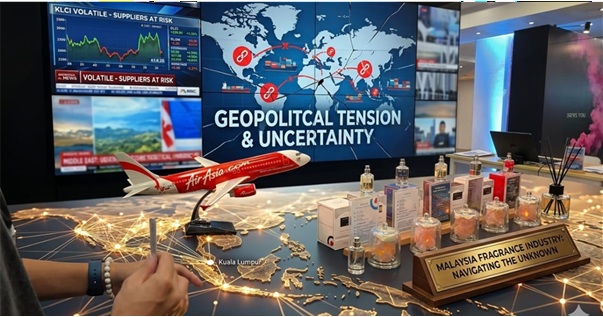
Geopolitical instability significantly influences the ebb and flow of the world’s economy. As tensions grow in the Middle East, some industries, such as energy, semiconductors, agriculture and tourism experience considerable downturns that often impact industry leaders and overall sectors' performance. Nevertheless, several industries remain steadfast and are starting to flourish amidst economic headwinds.

Over the past year, the global hygiene and personal care industry has shown surprising resilience to shifting macroeconomic conditions. As the cost of living and commodity prices rise in major economies worldwide, market demand has increasingly shifted towards local brands that provide clear proof of effectiveness, as opposed to spending on premium-priced international products that offer varying degrees of quality. This transition has proven extremely impactful for the Southeast Asian fragrance industry.

According to Alibaba’s platform data, the trade volume of fragrance products from this region has witnessed a staggering 533% year-on-year increase, highlighting an intensifying market set against the backdrop of geopolitical and economic volatility.

Made for locals, by locals

Southeast Asian perfume sector’s growth lies in the manufacturers’ familiarity with local conditions and climate. As demand for performance increases, local consumers seek products best suited to withstand the region’s heat and humidity, a capability often lacking in perfumes shipped from much colder and drier regions. Local brands are also much more acclimated to the scents preferred by their market.


Beyond their familiarity with the region’s scent preferences and climate, local perfume brands are more directly engaged with their market. As the local economy grows and people have more money to spend, homegrown brands can sell fragrances at prices people can afford while still making a good profit.

Local manufacturers can adapt faster than global competitors because their smaller size allows for quicker development and less red tape. As a result, Southeast Asian brands are increasingly seen as the go-to choice for the relevant and affordable product. 

Digital platform diffusion

Traditional marketing approaches have been a major obstacle for local brands that do not have access to extensive advertising budgets. As social media, e-commerce ecosystems, and influencer-driven marketing have solidified their relevance in the current business ecosystem, the playing field has shifted, allowing smaller fragrance houses to build strong brand identities and reach a wider audience despite working with a smaller budget.

By selling directly to consumers, local brands can quickly adapt their products based on real-time feedback while building a loyal community. This approach, combined with personal engagement, helps them stand out against international competitors.

Rise of a Global Contender

Taken together, these factors illustrate that the growth of Southeast Asia’s fragrance industry is not solely a byproduct of external economic pressures but also a reflection of its internal strengths. The combination of local insight, adaptability, and strong consumer engagement is enabling the homegrown brands to carve out a distinct and increasingly influential position within the global fragrance market.

Driven by the expansion of local consumer interest, homegrown brands are projected to gain significant market share and may soon rival established global leaders.

One thought on “The Southeast Asian perfume industry blooms amid geopolitical uncertainties

Leave a Reply

Your email address will not be published. Required fields are marked *